THE PATH OF THE OCCULTIST
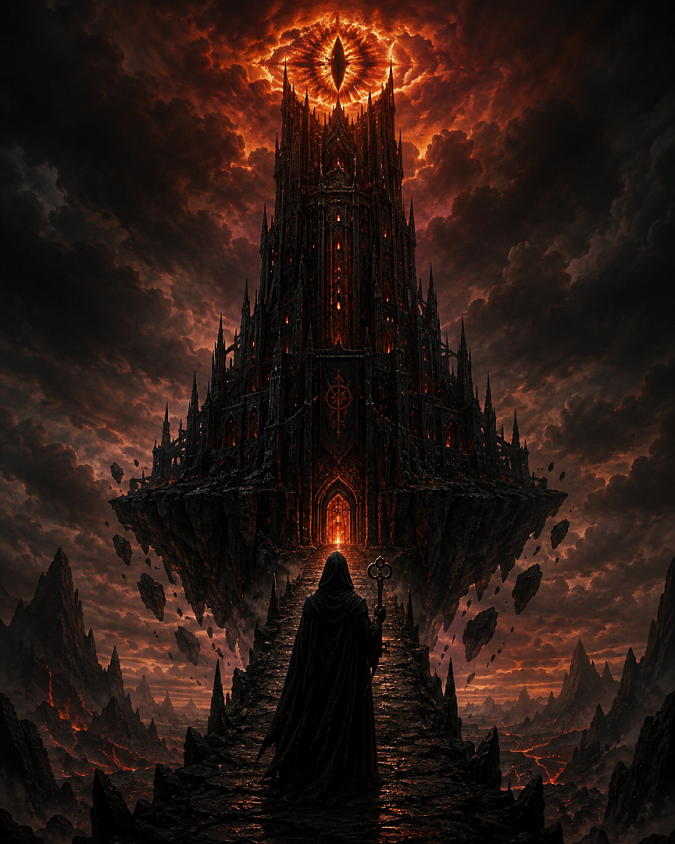
THE PATH OF THE SERIOUS PRACTITIONER
If you are not genuinely interested in making Magic and the Occult a serious part of your life, then I strongly advise you not to simply dabble in it.
Magic is not something I believe should be approached as a game, a trend, or something to experiment with because it looks interesting. Before attempting serious spellwork, a practitioner should first develop knowledge, discipline, self-awareness, concentration, and a deeper understanding of the spiritual traditions they are working with.
Study the Occult. Read widely. Explore different magical systems, religions, philosophies, mystical traditions, and schools of thought. Do not be afraid to investigate paths that are different from your own. There is something to be learned from almost every tradition.
You do not have to accept everything you study as absolute truth. Learn to question, compare, investigate, and think for yourself. The purpose of knowledge is not to imprison you inside another belief system, but to expand your understanding.
Never stop learning. No matter how experienced you become, there will always be something more to discover.
So, before you begin serious spellwork, I recommend developing yourself through several important stages.
DREAM RECALL AND DREAM JOURNALING
One of the first disciplines I recommend is learning to remember your dreams.
Dreams can become an extraordinary tool for self-examination. They can reveal patterns in your thoughts, emotions, fears, desires, memories, and subconscious mind. For the practitioner, developing strong dream recall also creates a foundation for later exploration of lucid dreaming and other altered states of consciousness.
Keep a dedicated dream journal beside your bed. Record your dreams immediately after waking, even if you only remember fragments.
Do not worry about interpreting everything immediately. First learn to remember.
Practice consistently for several months. You may be surprised at how much more vivid and detailed your dreams become once you train yourself to pay attention to them.
MEDITATION AND MENTAL DISCIPLINE
At the same time, begin developing meditation and concentration.
A practitioner who cannot control their attention will struggle to maintain focus during ritual or spellwork. Whether you approach Magic psychologically, spiritually, symbolically, or through a combination of these perspectives, concentration is fundamental.
Meditation does not mean that your mind must instantly become completely empty. That is an unrealistic expectation for most beginners.
Instead, learn to observe your thoughts without automatically following them.
One visualization technique I use is what I call the Mental Dumpster.
After relaxing your body, close your eyes and imagine a large dumpster appearing on your mental screen.
Take each distraction occupying your mind and place it inside the dumpster.
Your bills.
Your relationships.
Arguments.
Work.
Enemies.
Friends.
Responsibilities.
Fears.
Plans.
Everything that is demanding your attention.
Place each thought into the dumpster one by one.
When you have finished, close the lid and lock it.
Then mentally push the dumpster away until it disappears from your awareness.
The purpose is not to pretend that your problems do not exist. The purpose is to temporarily separate your attention from them so that you can enter a state of mental stillness and concentration.
Practice until you can enter that state more easily.
-
UNDERSTANDING HOW MAGIC WORKS
Before rushing into complicated spellwork, learn to ask the most important questions:
Why am I performing this working?
What am I attempting to accomplish?
What symbolism am I using?
What psychological, spiritual, energetic, or ritual mechanisms do I believe are involved?
What conditions might influence the outcome?
Why might a working succeed?
Why might it fail?
One of the biggest mistakes beginners make is assuming that Magic is simply a matter of finding a spell in a book, saying the correct words, lighting a candle, and expecting reality to immediately change.
Real practice is considerably more complicated.
Different traditions understand Magic in different ways. Some approach it through spirits and deities. Others emphasize consciousness, symbolism, energy, intention, correspondence, ritual psychology, or transformation of the practitioner.
Study these perspectives.
Do not simply memorize rituals.
Understand what you are doing.
CHOOSE YOUR PATH OF STUDY
Eventually, you may wish to determine which branches of Magic interest you most.
There are numerous approaches: ceremonial or High Magic, Witchcraft, folk magic, chaos magic, spirit work, divination, planetary magic, elemental traditions, ancestral practices, energy work, and many others.
There is no single path that every practitioner must follow.
Explore.
Study.
Experiment responsibly.
Then determine which systems genuinely resonate with your own development.
You may eventually follow one tradition, combine compatible practices, or develop your own system through years of study and experience.
PROTECTION AND PREPARATION
Protection should be treated as part of magical education rather than an afterthought.
Different traditions have different approaches to spiritual protection and ritual preparation. These may include cleansing practices, protective symbols, sacred boundaries, prayer, meditation, banishing rituals, amulets, talismans, or other traditional methods.
Learn the protective practices associated with the system you are studying before attempting more advanced work.
For practitioners studying ceremonial traditions, the Lesser Banishing Ritual of the Pentagram, commonly known as the LBRP, is one example of a well-known ritual worth studying within its historical context.
A practitioner should understand the purpose and symbolism of a ritual rather than blindly repeating words they found somewhere.
This brings me to another important warning:
DO NOT BE A DABBLER.
A dabbler reads one book, performs a handful of rituals, and suddenly begins presenting themselves as an accomplished occult practitioner.
That is not mastery.
There is nothing wrong with being a beginner. Every practitioner begins somewhere.
The problem is pretending that a few experiments constitute years of knowledge and experience.
Magic should be approached with humility.
Study before claiming mastery.
Practice before teaching.
Understand before presenting yourself as an authority.
The Occult is enormous. No single person knows everything.
ASTRAL PROJECTION AND OUT-OF-BODY EXPERIENCES
Once you have developed strong dream recall and meditation skills, you may wish to explore astral projection, lucid dreaming, or other forms of out-of-body experience.
These subjects have been interpreted differently throughout history. Some traditions understand them as genuine spiritual experiences, while psychological and scientific perspectives may interpret them differently.
Whatever your interpretation, approach the subject patiently.
Do not expect mastery overnight.
For some people, these experiences may develop relatively quickly. For others, it may take weeks, months, or years of practice.
Different techniques work differently for different people.
Study several methods.
Experiment carefully.
Keep records.
Learn what works for you.
Most importantly, do not become obsessed with forcing an experience to happen.
Development takes time.
YOUR FIRST SPELLS
Only after developing a foundation of knowledge, concentration, self-awareness, meditation, dream work, and protective practices should you begin exploring more deliberate spellwork.
Start simply.
There is no need to begin with the most complicated ritual you can find.
Consider beginning with constructive workings such as prosperity, opportunity, good fortune, personal protection, confidence, clarity, healing intentions, or removing obstacles.
Learn how magical correspondences work.
Learn about symbols.
Learn about timing.
Learn about intention.
Learn how ritual space is prepared.
Learn how candles, herbs, incense, colors, oils, planetary associations, elemental symbolism, and other correspondences are traditionally used.
For example, if a working calls for a candle, do not treat the candle as merely something you light because a book told you to.
Study the symbolism behind the color, the purpose of the candle, how it is traditionally prepared or dressed, and why that particular correspondence is being used.
Knowledge transforms ritual from mechanical repetition into conscious practice.
And remember: not every working will produce the result you expect.
A ritual that does not produce your desired outcome does not automatically mean the entire magical system is worthless.
Examine the working.
Examine your intention.
Examine your expectations.
Examine the circumstances surrounding the working.
Most importantly, examine yourself.
Magic is not simply about attempting to change the world around you.
It is also about changing the practitioner.
THE OCCULT IS A PATH OF CONTINUOUS LEARNING
There is no final point at which you can honestly say, "I know everything."
The deeper you travel into the Occult, the more you discover how much remains unexplored.
Study.
Practice.
Question.
Record your experiences.
Learn from your failures.
Learn from your successes.
Respect the traditions you enter.
Develop your own understanding.
And never stop learning.
Magic is not a shortcut to wisdom.
Magic is a discipline through which wisdom, experience, self-knowledge, and practice can develop over time.
Do not be a dabbler.
Become a student first.
Become a practitioner through experience.
And if you eventually earn the right to call yourself a Master, let your knowledge and actions demonstrate it.
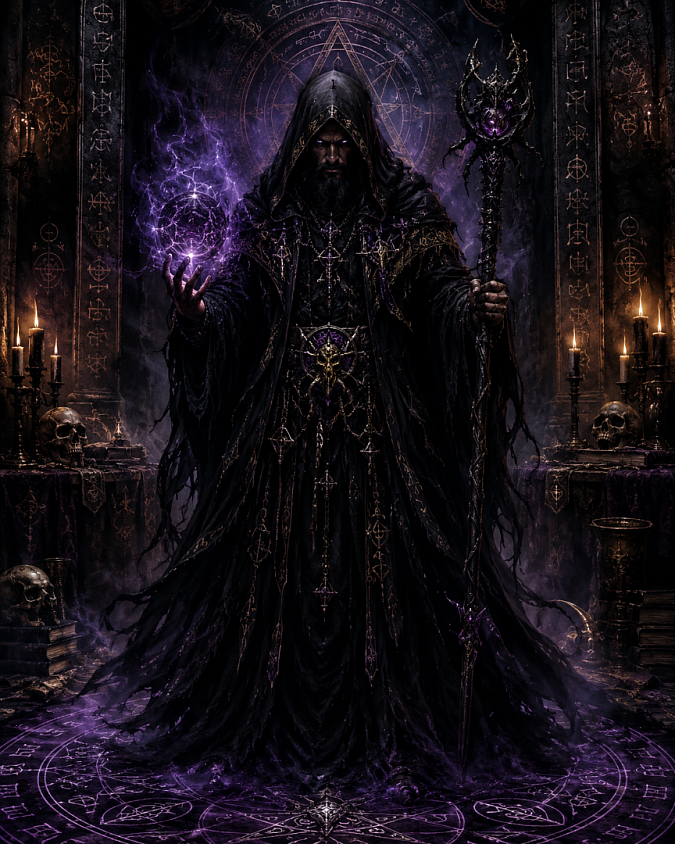
CHOOSING A MAGICKAL NAME
Choosing a Magickal name is a very personal part of the occult journey.
Many practitioners eventually choose a name that represents the identity they wish to embody within their spiritual and magical work. For some, the name carries deep symbolism and meaning. For others, it simply feels powerful, mysterious, or personally significant.
There is no single formula for choosing a Magickal name.
You can discover one through history, mythology, astrology, nature, folklore, dreams, personal experiences, or even create an entirely new name of your own.
Here are several approaches you can explore.
MEDIEVAL AND ANCIENT NAMES
Historical names can provide an enormous amount of inspiration.
Explore medieval European names, ancient royal names, warriors, scholars, mystics, or historical figures. You may discover names that have unusual meanings, powerful sounds, or historical associations that resonate with you.
You might find an obscure name that has almost disappeared from common use and decide that it perfectly represents your magical identity.
Do not choose a name simply because it sounds impressive. Research it and discover its history.
ASTROLOGICAL AND CELESTIAL NAMES
The stars and constellations are another excellent source of inspiration.
Research your astrological sign or the constellation associated with your birth. Look into the names of the principal stars within that constellation.
For example, Aries contains stars such as Hamal, Sheratan, and Mesarthim. You could use one of these names directly, modify its spelling, or use it as inspiration for creating something uniquely your own.
You are also not limited to your own constellation.
A star from another constellation may have a meaning, mythology, or sound that speaks to you more strongly.
You can also explore ancient astronomical names, stellar designations, planetary names, lunar terminology, and traditional names associated with celestial bodies.
The heavens provide an almost endless source of inspiration.
DRAGON AND SERPENT NAMES
If you are drawn toward dragons, serpents, or draconic traditions, explore names associated with dragons and serpentine beings throughout mythology and literature.
Look into different cultures and their stories of dragons, wyrms, serpents, and other reptilian beings.
You can also take an existing name and transform it into something uniquely yours.
Change its spelling.
Combine two names.
Remove letters.
Add syllables.
Create an entirely new variation.
The goal is not necessarily to find an existing name, but to discover something that feels connected to your own path.
MYTHOLOGICAL AND FOLKLORE NAMES
Mythology and folklore contain thousands of names that can inspire a Magickal identity.
Explore gods, goddesses, heroes, spirits, legendary creatures, ancient kings, witches, sorcerers, guardians, tricksters, and other figures from world mythology.
You may discover a name whose story reflects something about your own journey.
However, learn the history behind the name before adopting it.
A name can carry cultural, religious, or historical associations that you may not initially realize.
Knowledge should always come before adoption.
NAMES FROM NATURE
You do not have to limit yourself to historical or mythological names.
Nature itself can provide powerful inspiration.
Consider the names of:
Storms.
Rivers.
Mountains.
Trees.
Flowers.
Animals.
Planets.
Minerals.
Oceans.
Moon phases.
Natural phenomena.
Even a combination of several natural concepts can produce something completely unique.
For example, you might combine the symbolism of a raven with the imagery of a storm, or a dragon with the symbolism of a particular star.
CREATING YOUR OWN NAME
Perhaps the most personal method is to create a name that does not already exist.
You can combine sounds, syllables, languages, symbols, numbers, or words that have personal significance to you.
You might take part of an ancient name and combine it with something completely original.
You might create a word that has no established meaning whatsoever.
That is perfectly acceptable.
A Magickal name does not have to appear in an ancient grimoire to have meaning.
Its significance can come from you.
YOUR NAME IS YOURS
Ultimately, there are no absolute rules governing what a Magickal name must be.
Some people choose names with profound meanings.
Some choose names connected to their ancestry.
Some use astrological or planetary symbolism.
Some choose names inspired by gods, spirits, dragons, animals, or legendary beings.
Others simply create a name because they like the way it sounds.
All of these approaches can be valid within personal magical practice.
What matters most is the relationship you develop with the name.
A Magickal name can become a symbol of transformation—a representation of the person you are becoming, the path you have chosen, or the qualities you wish to cultivate.
Take your time.
Research.
Experiment.
Write down names that catch your attention.
Learn their meanings and histories.
Say them aloud.
See how they feel.
And do not be afraid to create something completely original.
Your Magickal name belongs to you.
It does not have to impress anyone else.
It does not have to make sense to anyone else.
It simply has to mean something to YOU.